Hypnotherapy for Pain Relief: A Natural Way to Manage Pain
The use of Hypnosis for pain management is one of its success stories – Heap and Aravind (1989)
Pain can be distressing, exhausting and often overwhelming. Many people search for natural pain relief or non-medication pain management options, especially following surgery, medical treatment or injury. Clinical hypnotherapy for pain relief is increasingly recognised as a safe and effective way to support the body’s natural pain-regulation systems.
This article focuses on hypnotherapy for managing pain arising from medical conditions, such as cancer, surgery, or recovery from injury. Chronic pain on the other hand involves additional long-term nervous system changes and will be discussed separately in another article. In neuroscience there is exciting emergence of new ways of understanding how the brain specifically reacts and participates in chronic pain.
Hypnotherapy is a collaborative treatment approach. It requires active participation. It is not something that is ‘done’ to you. Instead, hypnotherapy works by guiding your attention, imagination and thought processes in a way that supports comfort, calm and improved pain regulation. It is easy to learn and you get better with practice. It is completely safe and clients will never be asked to do anything they are not comfortable with. The therapist is the guide but the client does the work. It’s a collaboration and partnership. So, contrary to many popular ideas of hypnosis, it is not a form of mind control nor is it a magic trick. In fact it is not about being in any sort of ‘trance’ at all. It is a simple down to earth common sense therapy that works with clients’ own goals enabling them to change and move forward.
Across the UK, NHS clinicians now use Hypnotherapy in areas such as midwifery, oncology, palliative care, anaesthetics and gastroenterology. Hypnotherapy for surgery recovery is increasingly used to reduce anxiety, support pain relief and improve healing outcomes.
Pain is complex – but relief is possible
Pain is not simply a physical signal. It is a complex experience involving multiple systems in the body and brain. Heap and Aravind (1989) describe five main components of pain: sensory, cognitive, physiological, behavioural and emotional.
All of these components influence how strongly pain is experienced. Lets look at each in more detail.
- Sensory component – where the pain is, the quality or characteristics of the pain, its variability, does it move? What does it feel like?
- Cognitive component – how the person interprets the pain, the reasons for it being there and its likely progress (either easing or worsening), the amount of attention that is given to the pain and the anticipation of pain or its worsening.
- Physiological component – this involves both the physiological responses of the nervous system as well as the adrenalin response which increases the ‘fight or flight’ mechanisms the body (sweating, rapid heart rate etc).
- Behavioural response – such as muscular tension, guarding responses, escape intentions or active avoidance. Immobilising will be necessary in cases of injury to allow healing to take place. As well as the complex social behaviours such as deciding not to go into work or seeking medical assistance.
- Emotional component – the person’s emotional reactions: fear, frustration, distress or previous experiences / associations.
Of all the above, the cognitive component looms large. However, that being said, all five components can be successfully helped with Hypnotherapy. Often the first stage in pain control is addressing and removing pain related fear and anxiety. The pre-talk or educational aspect of Hypnotherapy is crucial here.
“Pain is a multiple system output activated by an individual’s specific brain. – Melzack (1999)”
This means pain is real — but it is created through interaction between body and brain. The brain is not a passive receiver of signals; it is an active participant. Moreover it interprets and makes sense of these signals
The evolving understanding of pain is transforming its management: especially with the use of hypnotherapy
It was once believed that pain depended mainly on how strongly pain receptors in the body were firing. We now understand that pain depends just as much — and often more — on how the brain interprets those signals.
“Pain is not simply the product of injury; it is a dynamic process involving the central nervous system. – Wall (2000)”
We know that pain is more to do with what the brain is doing with the information it receives, than what is happening at local sites of injury, surgery or medical conditions. This does not mean that pain is not real or ‘all in our minds’. It is very real. But simply focussing on the injured site is only part of the story. Let me explain why:-
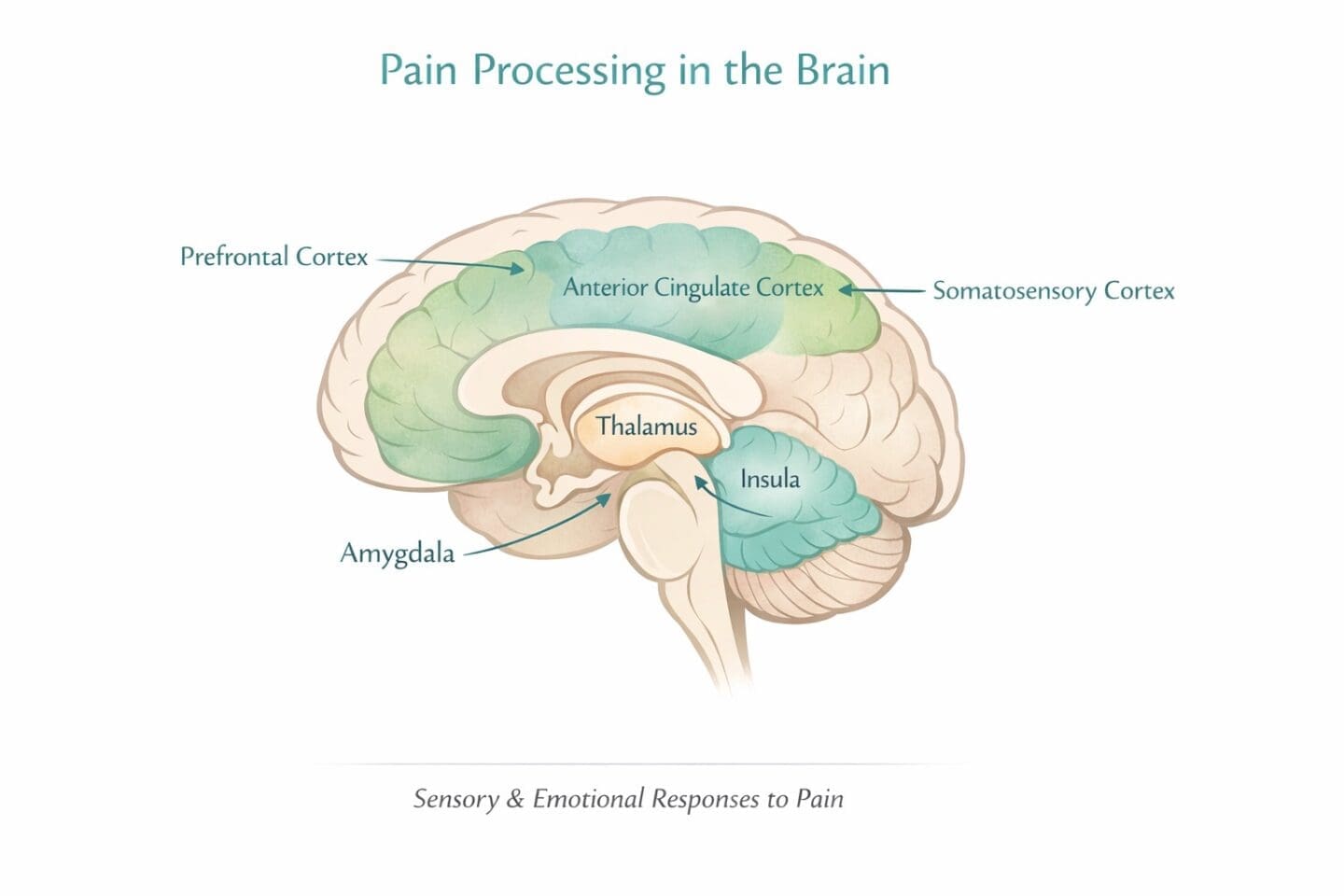
Although physical damage can influence the amount of pain we feel, it is not the most significant factor in our experience of pain. Scientists are demonstrating that it is down to the interplay and activity in several different areas of the brain that together form the sensation of pain.
“Pain is about protection, not damage. – Moseley (2007)”
When the brain perceives danger, it increases protection. That protection often comes in the form of pain. Because pain is processed in the brain, it can also be influenced. The brain can learn different responses. This is where hypnotherapy comes in.
Hypnotherapy helps the brain turn down the volume of pain signals
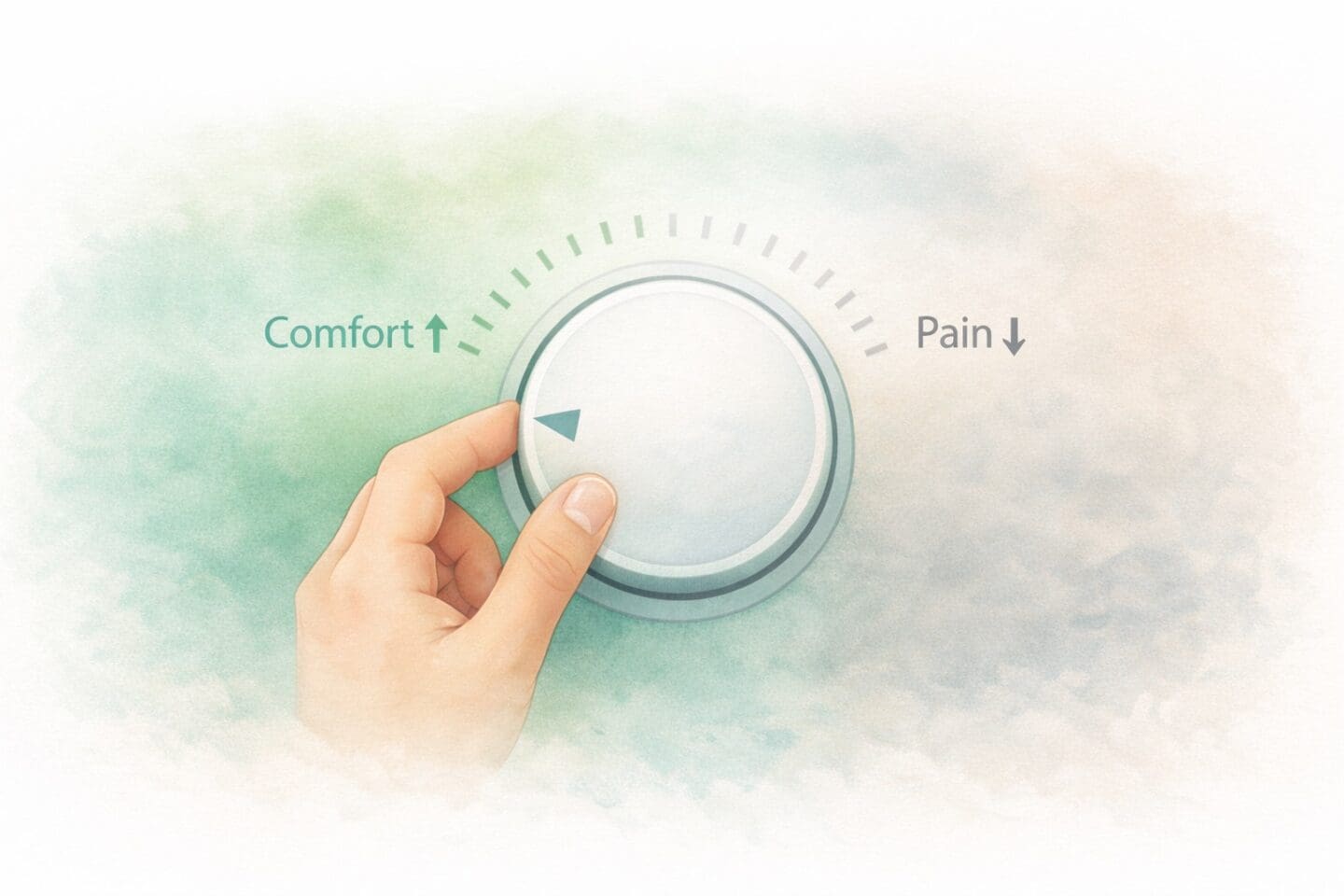
Clinical hypnotherapy for pain relief helps by reducing pain intensity, reducing pain distress, calming the nervous system, increasing a sense of control, and changing how sensations are interpreted. Moreover it is increasingly, widely used evidence-based therapy for pain, anxiety, and sleep issues—focused on lasting relief, not just management.
Hypnosis has been shown to be effective in reducing both acute and procedural pain. – Patterson and Jensen (2003)”
“Hypnotically induced analgesia is a reliable and replicable phenomenon. – Montgomery, DuHamel and Redd (2000)”
How hypnotherapy changes the pain experience
In Hypnotherapy we use a variety of techniques.
‘Direct analgesia’ involves suggestions such as ‘the sensation softens’ or ‘the area becomes comfortably numb.’ Brain imaging research shows hypnosis can reduce activity in regions associated with pain intensity and pain distress (Rainville et al., 1997).
‘Glove anaesthesia’ involves creating numbness in one hand and mentally transferring it to the painful area. This demonstrates that pain is centrally processed in the brain.
‘Sensory transformation’ allows burning to become warmth or stabbing to become pressure. Changing the meaning of sensation often reduces distress and overall pain perception.
‘Attention redirection’ through guided visualisation and safe place imagery reduces the brain’s processing of pain signals.
‘Dissociation techniques’ can create psychological distance from discomfort.Hypnosis does not deny pain. It changes how the brain responds to it.
Hypnotherapy for managing and relief of pain at Clear Spring Therapy
At Clear Spring Therapy, Hypnotherapy is integrated with Cognitive Behavioural Therapy (CBT), Mindfulness and for chronic pain, Pain Reprocessing techniques. (More on PRT in my article on chronic pain.)
The goal is not suppression. The goal is to bring the body and mind into a place of safety, calm, and better regulation of the nervous system.
For many people searching for natural pain relief or hypnosis for pain management, the most powerful benefit is the restoration of control and confidence.
The very good news is that Hypnotherapy can provide a sense of mastery and increased self-control. This creates a way out for everyone who has struggled with the feelings of utter helplessness in the face of constant pain.

